


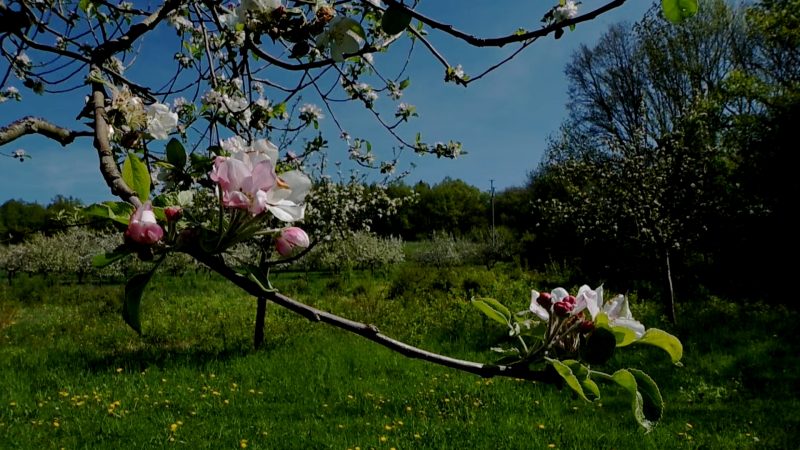
A friend of mine was very surprised that flowers grow normally in nature, because she usually only bought them in stores — and I don’t think this is an isolated case. People who live in the city have it that way. They only see cut and prepared goods: bananas are neatly bent, meat is not cut from animals that someone had to kill, but is “produced” in a factory, and apples are red, fragrant, and one is the same as the other.
It’s cute, comfortable, and consumer-friendly. And it costs a lot of money.
Travelers, tramps, slobs, and probably tourists — which I assume is the majority of our readers — will have a different opinion. These are people who have seen a lot of the world and are not surprised by anything. People who appreciate the refreshments they find along the way.
They chew sorrel or spruce shoots, brew nettle or marigold tea, and enjoy crunching on the flatbreads that grow on apple trees along the roads or on the crumbling ruins of former farms — and which defy time with admirable perseverance…
But they don’t necessarily have to be plains, they can also be apple trees bred dozens or even hundreds of years ago.
The character of their fruits and the taste often do not conform to fashionable ideas and they may not be exactly handsome, but there is an earthiness and stubbornness in them that deserves respect. And perhaps I eat them with great pleasure.
And fortunately, not only me.
At the A. E. Komers Horticultural and Agricultural School in Libverda near Děčín, a nursery was first established almost a quarter of a century ago, and today we can also find a set of full-grown trees of these varieties — an archive of the gene pool, which will not be lost and will be available to future generations.
There are almost a hundred of these varieties!
We talked about this in particular with the school principal, Libor Kunte.
I asked the employee in charge of the orchard how these trees bear fruit — and unsurprisingly I learned that they do well, as long as the weather doesn’t interfere with the development of the fruit. And that has been happening more than is healthy in recent years.
The biggest problem?
Dry.
By the way, if you stop by Libverda, the school also offers (after consultation) the opportunity to purchase selected species — and return them back to nature.

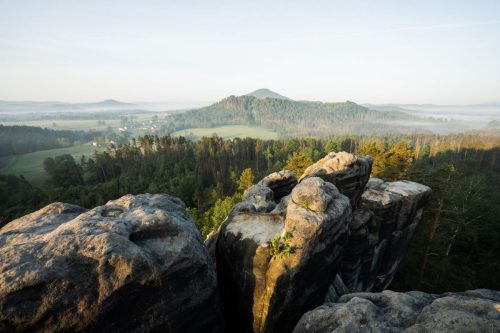
Jak se dostat do Českého Švýcarska? Praktický průvodce dopravou po Českém Švýcarsku.
Rozhodli jste se navštívit Národní park České Švýcarsko? Máme radost! A teď ještě, jak vás sem dostat, abyste měli cestu co nejpohodlnější…
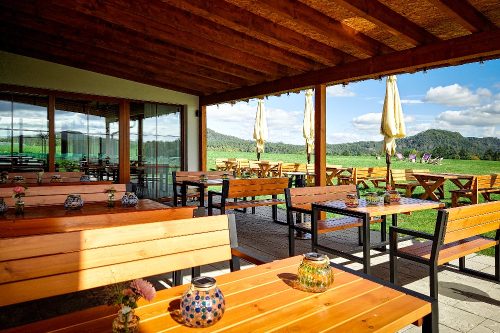
Restaurants and cafés in Bohemian Switzerland with the best views
Naturally, the main reason for visiting Bohemian Switzerland is the views. The local landscape, set around the Elbe Valley and straddling the…
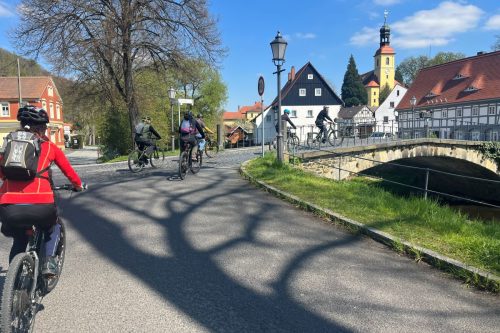
Cycling along the Mandava: discover the Mandava Cycle Route
The summer tourist season is slowly drawing to a close, and now is the perfect time to get out on your bike.…