


Pravčická Gate is undoubtedly one of the most famous natural phenomena of the Czech Republic and a symbol of the Bohemian Switzerland National Park. This natural rock arch is located near the village of Hřensko and attracts thousands of tourists every year with its monumentality, romantic surroundings, and breathtaking views.
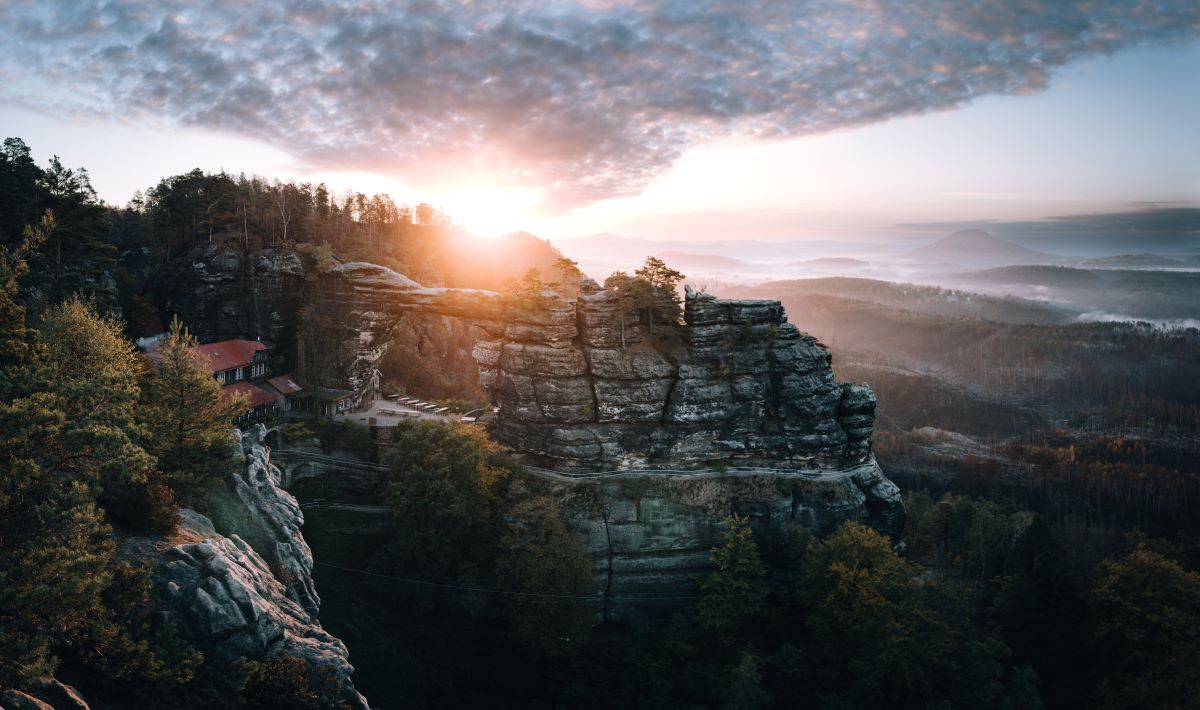
The largest natural sandstone arch in Europe
With a width of 26.5 meters, an arch height of 16 meters and a total height of over 21 meters, Pravčická Gate is the largest natural sandstone arch in Europe. Its majestic shape was created by the gradual erosion that has left this impressive formation over millions of years. Due to its uniqueness and preservation, it was already considered a natural monument in the 19th century and has inspired many painters, writers and filmmakers – it appeared in the film The Chronicles of Narnia, for example.
Geological origin and evolution
Pravčická Gate is a remarkable symbol of the power of nature and geological processes that have taken place here for millions of years. The area of Bohemian Switzerland is made up of Late Cretaceous Sandstones that were deposited at the bottom of the shallow sea about 90 million years ago. These layers were subsequently wrinkled, uplifted, and subjected to erosion. Rainwater, frost and wind have then sculpted the sandstone formations into gorges, towers and even a arch over millennia. In the case of the Pravčická Gate, the presence of less resistant layers, which were more easily carried away by erosion, also played a role, creating the characteristic arch.
Impacts of the fire in 2022
In the summer of 2022, Bohemian Switzerland was hit by a devastating forest fire that spread over several hundred hectares and significantly affected the area around the Pravčická Gate. Although the arch itself was not directly affected by the flames, the fire significantly changed the landscape – many forests in the vicinity burned and access roads were temporarily closed. The effects are still visible in the area, but nature is gradually recovering and visitors can observe the natural process of forest regeneration. The park management now emphasizes sustainable tourism and encourages the return of native plants and animal species. Visiting this area thus offers not only an aesthetic experience but also a unique insight into the power of nature and its ability to recover.
Another rock gate can be found in Northern Bohemia, a little further east in the Lusatian Mountains.
The Milštejn rock gate is made of metamorphosed rocks – specifically phyllite or schist. This is quite unusual because most of the natural rock windows and arches in the Czech Republic are formed in sandstones.
This Gate is actually a schistose rock window in phyllite rock (sometimes referred to as crystalline schist), and was formed by mechanical weathering and disintegration of layered rock, not by typical sandstone erosion.
What to expect when you visit
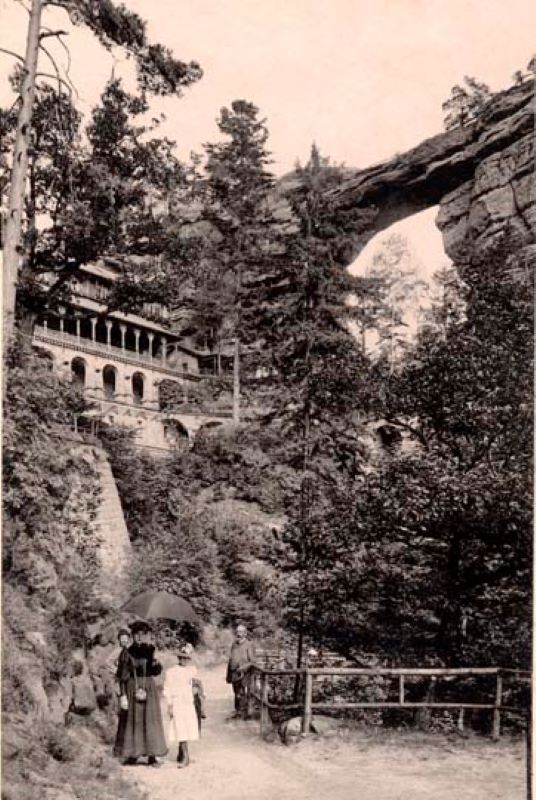
The journey to Pravčická Gate is an experience in itself. It leads along a picturesque path and offers beautiful views of the surrounding rock massifs. Right next to the Gate is the historic chateau Sokolí hnízdo (Falcon’s Nest), now a restaurant and museum. The surrounding area is interspersed with scenic routes, some of which offer fantastic views not only of the Gate itself, but also of the surrounding landscape full of sandstone formations.
And a few more tips:
- Bestseason: it’s beautiful here all year round. :-) In fall, you get a whole new and colorful view of the landscape.
- With children: yes, but the stairs up to the gate are unsuitable for prams
- Dogs: yes, on a leash
- Entrance: there is a fee to enter the Gate area, it is open seasonally, usually from spring to fall.
- How to get here: directly to the Gate only on foot. The nearest car park is in the village of Hřensko, from where a red marked trail leads to the Gate (from Tři prameny, approx. 3 km). We recommend sturdy shoes and plenty of water – although the route is not difficult, the climb can be steeper in places. It is also possible to use bus lines BUS 434, BUS 435, BUS 441 and BUS 438.