


Bohemian Switzerland is currently going through a very difficult time. Part of the national park has been affected by a fire, and the symbol of Bohemian Switzerland – Pravčická brána – along with the gorges and other sites, is currently inaccessible. We have selected some places in Bohemian Switzerland and the surrounding area that you can still visit without restriction, without jeopardising the work of the fire brigade or anyone else. On the contrary, by visiting them, you will be supporting the region and local businesses.
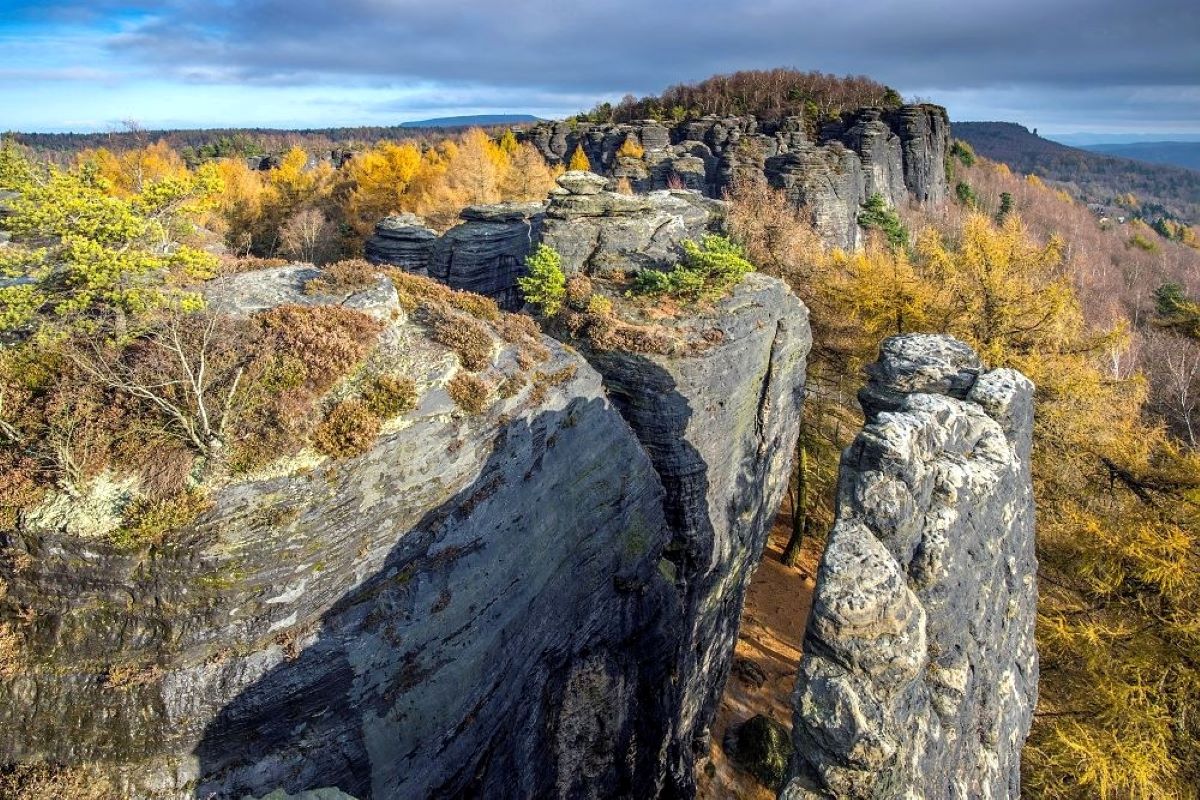
Tisá walls and Děčínský Sněžník
The rock formation above the village of Tisá is one of the most spectacular and beautiful rock formations in the country, featuring dozens of remarkably shaped rock towers – which people have been naming for over a hundred years – and a labyrinth of paths and passages. The nearby rock formations of Volské kameny and Ostrovské stěny, a remarkable trail running parallel to the border, the idyllic paradise at the bottom of a rocky basin – the hamlet of Ostrov, the breathtaking view from the Grenzplatte rock platform, and the table mountain Děčínský Sněžník with one of the most impressive stone lookout towers in the Czech Republic – these are further places you’ll never forget.
On top of that, there are dozens of options for cycling, scootering or taking the bus down, for example, into the valley of the Biela stream – to the breathtaking Hercules’ Pillars or all the way to the Königstein rock fortress, or perhaps to the magnificent Elbe Gorge. Here you can discover unexpected and little-known gems, such as the Baroque cobbled path above Dolní Žleb, the Klopotský Waterfall and unconventional routes to the Saxon table mountains.
Děčín and the Děčín Region
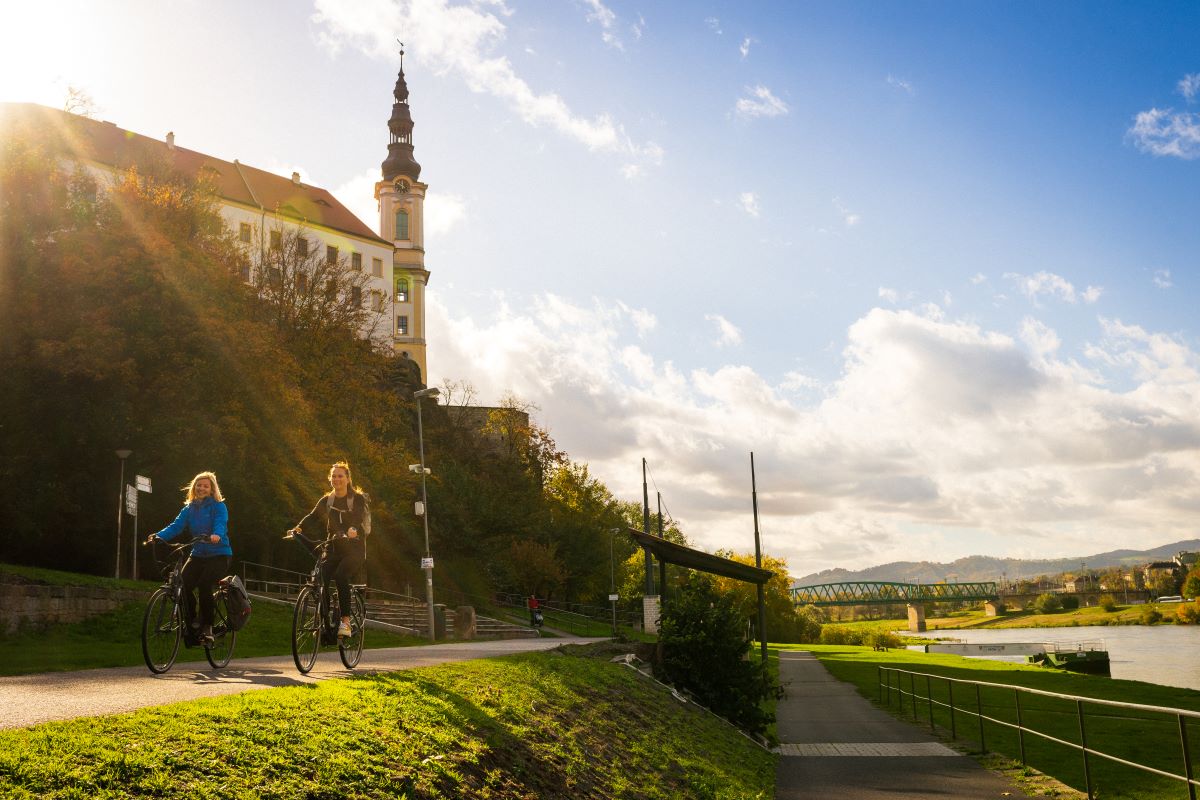
Děčín, the lowest-lying town in the Czech Republic, is the first gateway to the Czech lands as you travel upstream along the River Elbe. Towering above the river here is the long-standing most-visited historical monument in the Ústí nad Labem Region – Thun Castle, with three guided tour routes, magnificent gardens, the world-renowned ‘Dlouhá jízda’ (Long Ride), and the adjacent Church of the Exaltation of the Holy Cross.
On the opposite bank of the Elbe, directly opposite the castle, you can climb up to the restaurant on Pastýřská stěna via the only via ferrata in the Czech Republic, situated right in the city centre, and at the top enjoy a magnificent view of Děčín, as well as a zoo hidden away in the woods.
Cyclists will be making a fatal mistake if they fail to try one of the two beautiful cycle paths – the one leading upstream along the Ploučnice to the castle-filled town of Benešov nad Ploučnicí, a gem of the Saxon Renaissance, or the Elbe Cycle Route, which concludes its long journey from the river’s source here in the deepest sandstone canyon in Europe. The Elbe Cycle Route runs along the left bank of the Elbe and is therefore also accessible in the area opposite Hřensko.
Česká Kamenice
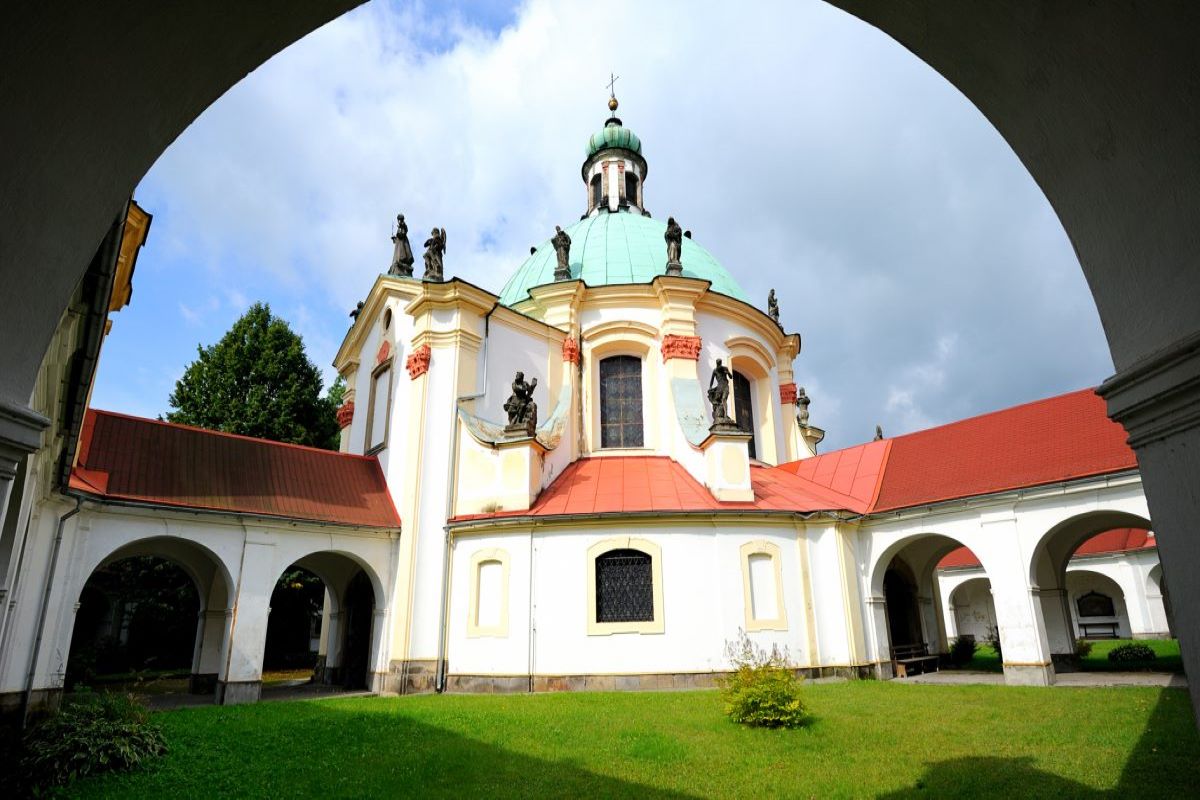
A historic town that has yet to be fully discovered and appreciated, situated at the junction of three protected landscape areas – the Elbe Sandstones, the Bohemian Central Mountains and the Lusatian Mountains – is full of remarkable buildings, ranging from a late Baroque Marian pilgrimage chapel, through a picturesque square and the Church of St James the Greater with its observation tower, to the ruins of Kamenice Castle, which offer panoramic views. Whichever direction you set off in from here, extraordinary experiences always await you.
For instance, past the nostalgic lido along the restored promenade to the Jehla rock promontory and the mysterious Brethren Altar hidden in the woods, to the observation tower at Studenec, to the country’s largest basalt ‘organs’ – Zlatý and Stříbrný vrch, through the idyllic valley to Mlýny and Kytlice, to Srbská Kamenice with its village nature trail, unique rock formations, mysterious ‘Swedish’ cave and rock theatre, or to Stará Oleška and its popular recreational fishing pond – it will always be a peaceful yet thrilling journey.
Jetřichovice
You can explore Jetřichovice, a village that has been a favourite for over a hundred years, via several scenic nature trails. Be sure not to miss the climb to Mariina vyhlídka, featuring a newly installed replica of the original viewing gazebo, and then set off along the ridge of the Jetřichovice Cliffs to Vilemínina vyhlídka and on to Rudolfův kámen, before returning to Jetřichovice via a beautiful forest path amongst the sandstone rocks. Another extraordinary experience is the climb to the recently opened former Falkenštejn rock fortress, exploring the remarkable Trpasličí skála (Dwarf Rock) with its bas-reliefs of gnomes and a widow – whom, according to legend, they saved – and a walk through Pavliní údolí (Pavlina’s Valley), formed by the Chřibská Kamenice stream,
A little-known but beautiful walk takes you across the Všemilská Folga to Všemil, with its rock chapel, a Sudeten cemetery restored by volunteers, the newly uncovered largest rock overhang in the area, and remarkable half-timbered houses. In Jetřichovice, you can also take a dip in the natural swimming area or relax on the sun-warmed rock at the Treppenstein viewpoint.
Chřibská and the surrounding area
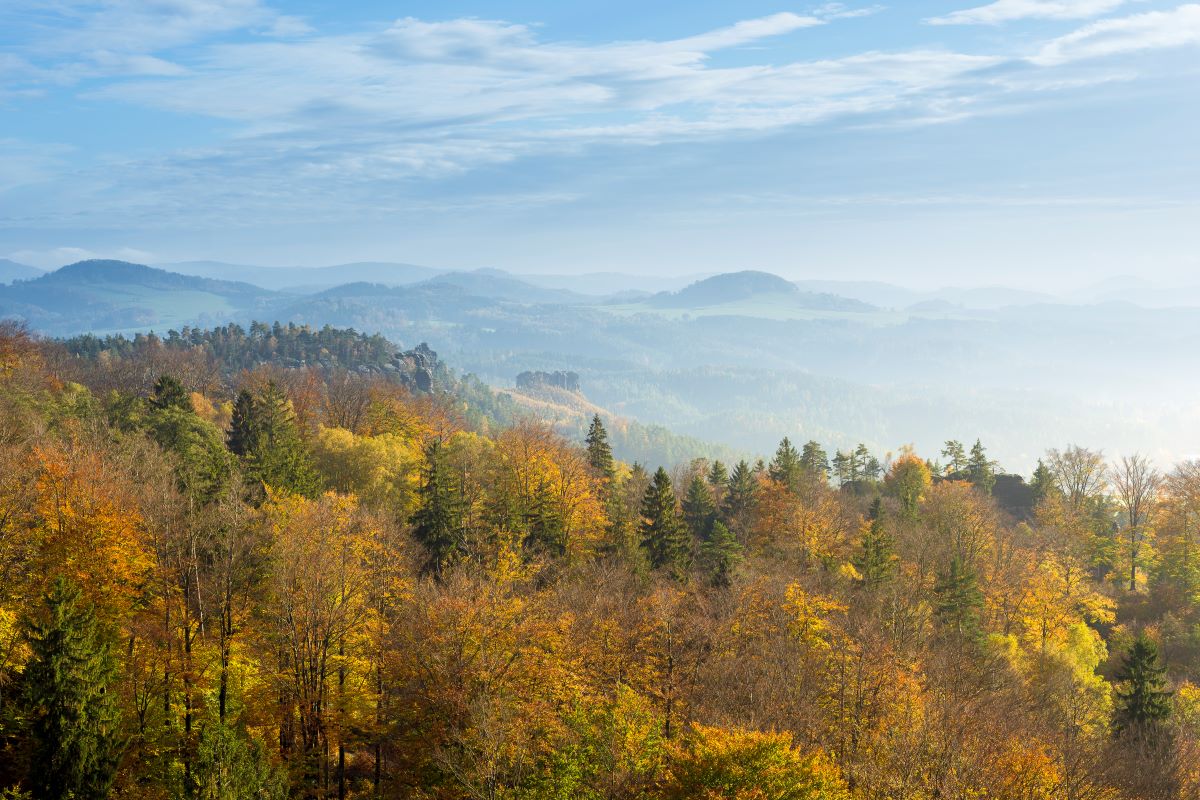
The little town of Chřibská, with its picturesque square, the Church of St George, a cosy café and a unique museum dedicated to local native Tadeáš Henke, a botanist and traveller, is surrounded by stunning countryside that harbours unexpected beauty.
Take, for example, the cascade of waterfalls on the stream flowing down from the slopes of Plešivec, the most beautiful meadows in the area, which bloom with rare Czech orchids in June; the mysterious Chřibský Castle; the charming Budersdorf Trail leading to Tokáň and the picturesque ‘Narrow Stairs’ and the rock formation known as Cipísek, which children especially love; the unique water channel and aqueduct; the natural swimming area, the enchanting forest slope densely covered with perennial moonwort, the beautiful forest paths from Křížový buk, the historic forest theatre, a walk to the Spravedlnosti viewpoint and to the remarkable rock formation known as Pickelstein…
A stroll through the town also offers a unique opportunity to explore the little-known yet vibrant open-air museum of charming half-timbered houses.
Doubice
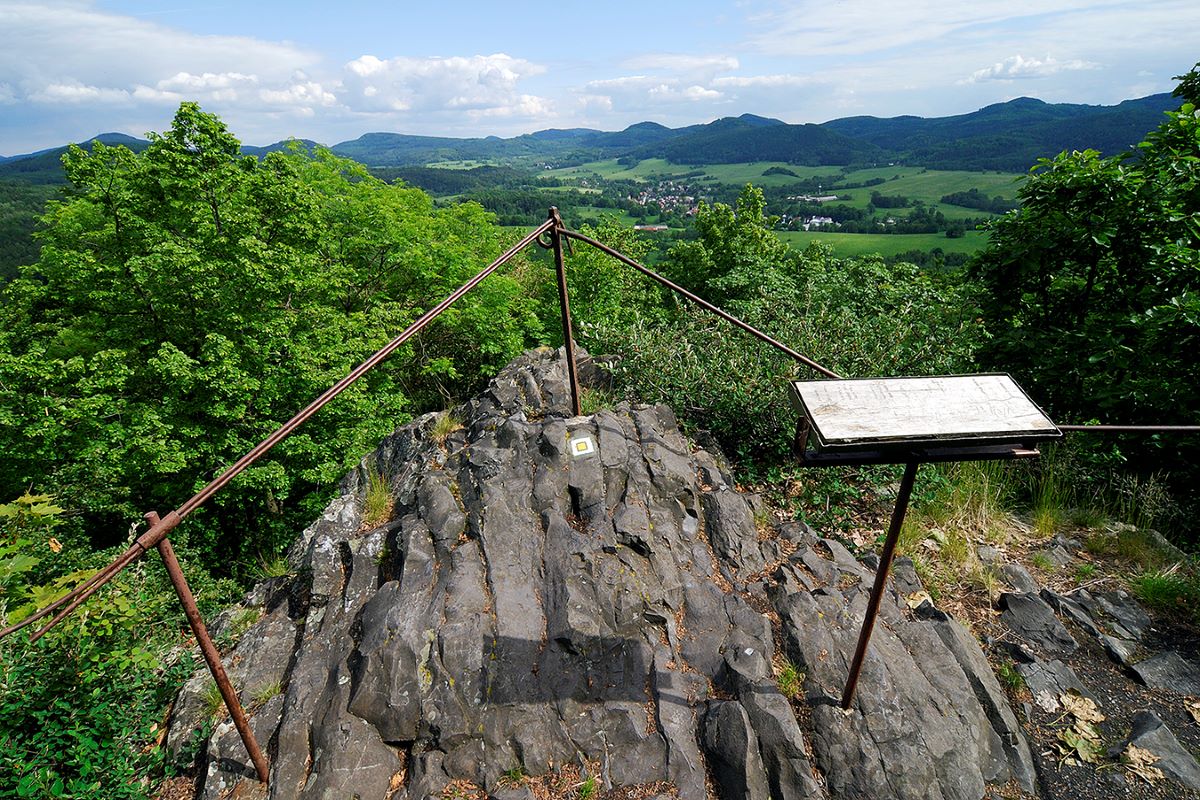
Another natural gallery of folk architecture is the half-timbered houses that make up the vast majority of the village of Doubice. Here you’ll also find a marvellous collection of wooden sculptures and all manner of structures near the Stará hospoda restaurant – you’ll find it hard to get the children to leave. Not far from the village is the starting point of a hiking trail that will take you to a little-known rock town hidden in the woods, to the mysterious Dvorana, and to the highest point of the ‘Narrow Stairs’ – also nicknamed ‘Mouse Hole’ – a rock crevice with a staircase not unlike a ladder, through which a more corpulent person would certainly not be able to squeeze.
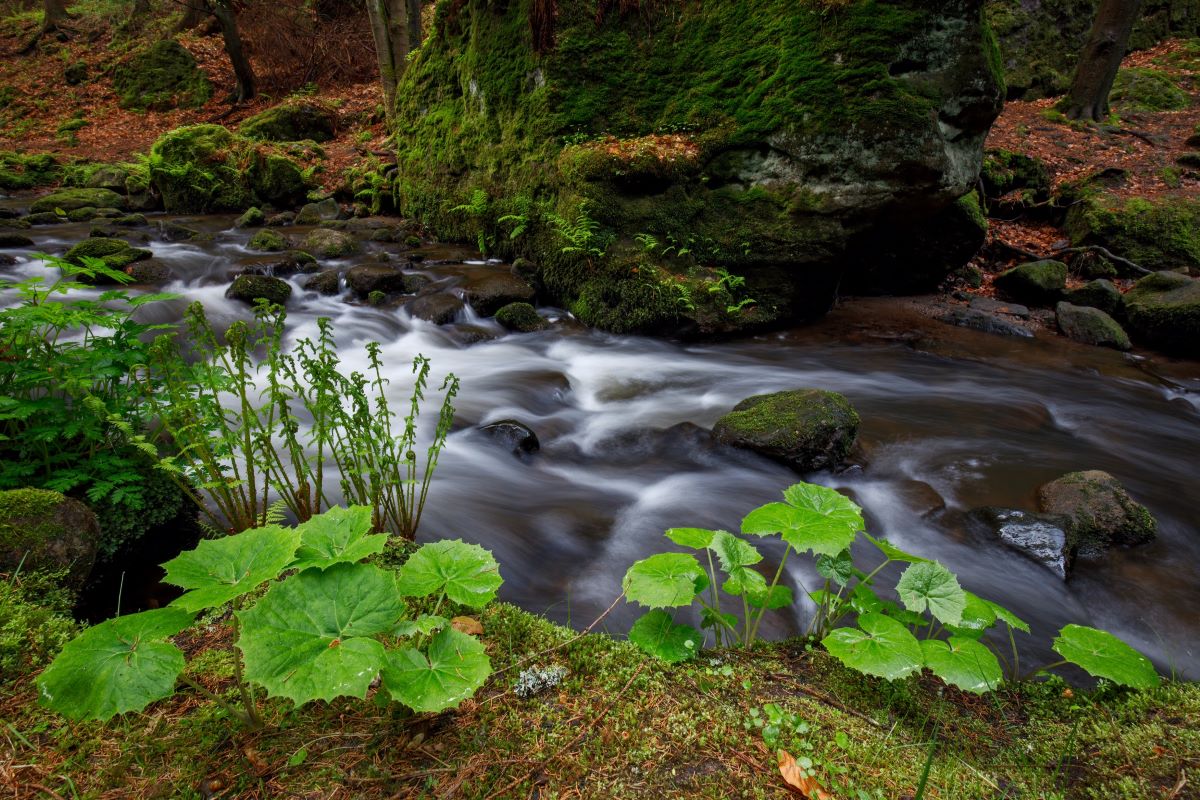
On the way to neighbouring Kyjov, the Kyjov Dam appears on the left – a body of water formed by the Sýrový Stream, home to one of the region’s most beautiful swimming spots. You are now at the very start of the Kyjov Valley of the River Křinice, with a rocky path leading above the valley to Praporek, as well as a comfortable route along the river to the famous Klenotnice, the Fairy Cave, the Tourist Bridge and on, all the way to Zadní Doubice and across to the Saxon side – perhaps as far as the small boats in the Obere Schleuse gorges.
Krásná Lípa region
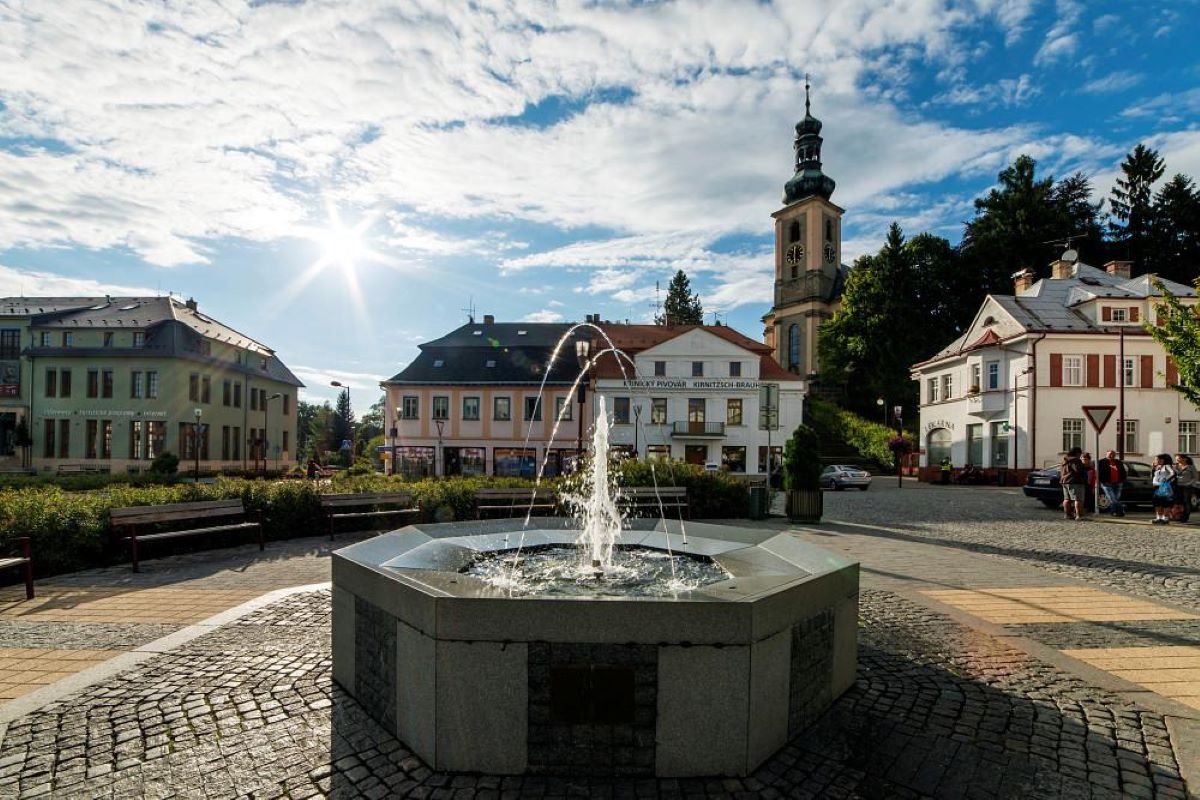
The town of Krásná Lípa is one of the most welcoming destinations for tourists. The beautifully restored town square features the House of Bohemian Switzerland, an information centre and interactive exhibition, the Falkenštejn Brewery, the Mana chocolate shop with its chocolate workshop, several cafés, the Cimrák recreational lake, Kamenná Horka with the Luční Bar, and a ring of charming half-timbered houses… And we haven’t even ventured into the surrounding area yet – for example, to the lesser-known but beautiful viewpoint on Karlova výšina, or, above all, to the Kögler Nature Trail, which criss-crosses the Krásná Lipa region.
If you follow it, you’ll discover the village of Vlčí Hora and the viewing tower on the hill of the same name that towers above it; here you can visit the stunning garden as well as the shop and tea room of the well-known natural cosmetics brand Nobilis Tilia, across the Kyjov Valley you’ll reach a valley adorned in winter by famous ice falls; you’ll pass through Brtníky with its forest Way of the Cross, head towards Brtnice Castle and the hidden overhang known as Velký Pruský tábor, in Zahrady, you’ll see an astonishing geological map, and via the abandoned village of Skřivánčí pole, you’ll return to Krásná Lípa along the ‘Avenue of the Year 2021’, treated to stunning views of the three highest peaks of the Lusatian Mountains on the horizon.
Šluknov Region
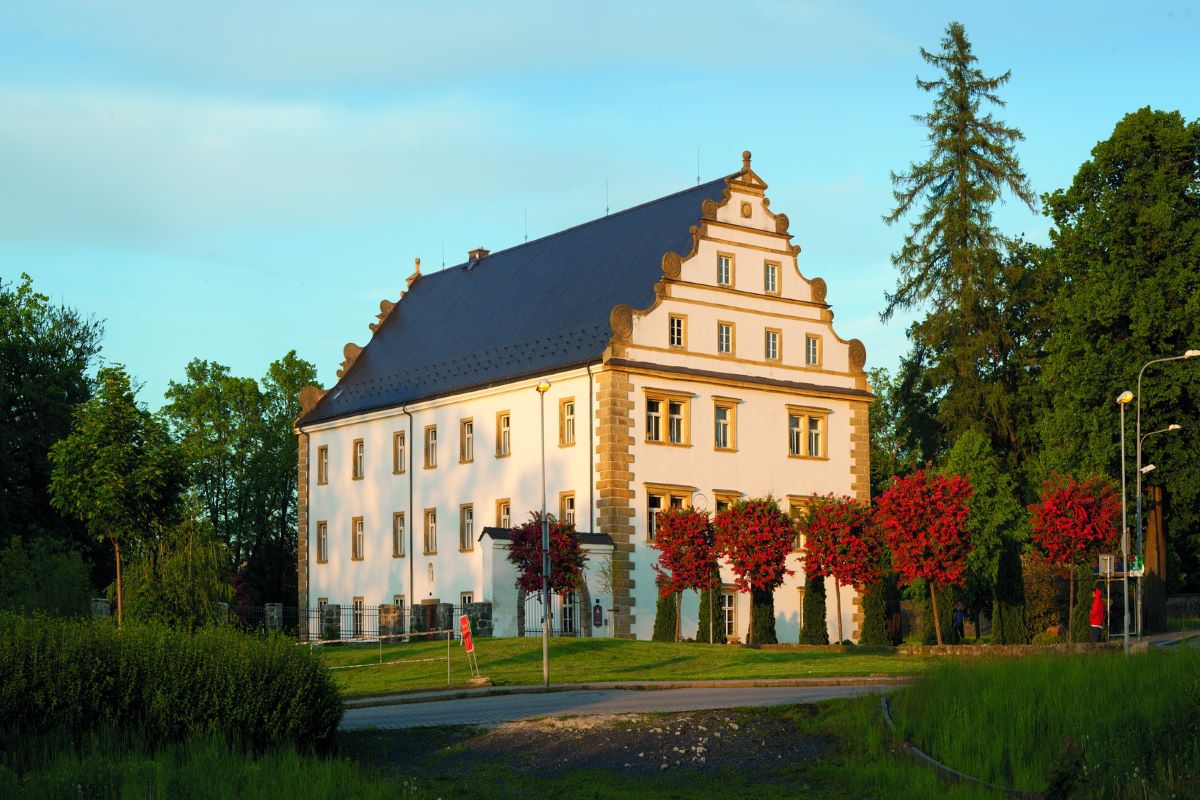
The original name of the Šluknov Region, ‘Böhmisches Niederland’ (meaning ‘lowlands’, not to be confused with the Netherlands), encompasses an immensely interesting, gently undulating landscape stretching from Dolní Poustevna to Varnsdorf. Here you will find, first and foremost, fourteen outdoor Stations of the Cross (for example in Šluknov, Vilémov, Brtníky, on Annaberg and Jáchym Hill, or in Království), interesting religious monuments – such as St Nicholas’ Church and the Three-Sided Chapel in Mikulášovice, the stunning Neo-Romanesque minor basilica in Filipov, the northernmost Loreto in Rumburk, Šluknov Castle – a phoenix that rose from the ashes, and the towerless church in Varnsdorf…
You can take a stroll along the Thieves’ Trail, climb the viewing towers at Tanečnice, Vlčí hora, Dymník and Hrádek, and visit Lipová, the ‘Village of the Year 2019’. It’s well worth a leisurely wander, sitting by the castle pond or visiting the meticulously restored half-timbered house which houses the information centre. You’ll come across countless industrial buildings that are now listed monuments, as well as stately villas in every conceivable style; you can head to the northernmost point of the Czech Republic, but it’s also a brilliant idea to cross the border and explore picturesque border towns such as Seifhennersdorf, Großschönau or Waltersdorf.
The Western Lusatian Mountains
The Lusatian Mountains begin at Česká Kamenice. However, their true character only really begins to reveal itself beyond Kytlice, in Polevsko and around Rybniště. Malý Stožec is the first of the hills from which you can observe the rising contours of the lowest mountains in the country, which never cease to surprise with their beauty. You can, however, start in the foothills, by Světlík Pond with its preserved windmill and, above all, in the former mining town, now the village of Jiřetín Pod Jedlovou.
You can easily learn about the area’s mining history in the Jan Evangelista adit, whilst near Dolní Podluží, the Milířka nature trail will take you on a journey into the region’s mining past. Jedlová, the third-highest peak in the range towering above the village, boasts a magnificent stone observation tower. Nearby lies the spiky ruin of Tolštejn, famous for its views, and just above Jiřetín you’ll find one of the most beautiful Stations of the Cross in the country – a series of late Baroque stations leading up to Křížový vrch.
Hidden away in the woods is the immensely charming Jedlová railway station, from which you can set off on a marvellous hike to Jelení skála and Stožec; then, via a brand-new footbridge, cross the busy road at Stožecké sedlo and head for the second-highest peak of the Lužické Mountains – Pěnkavčí vrch.

Jak se dostat do Českého Švýcarska? Praktický průvodce dopravou po Českém Švýcarsku.
Rozhodli jste se navštívit Národní park České Švýcarsko? Máme radost! A teď ještě, jak vás sem dostat, abyste měli cestu co nejpohodlnější…
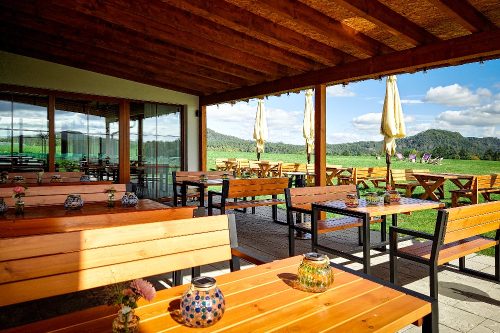
Restaurants and cafés in Bohemian Switzerland with the best views
Naturally, the main reason for visiting Bohemian Switzerland is the views. The local landscape, set around the Elbe Valley and straddling the…
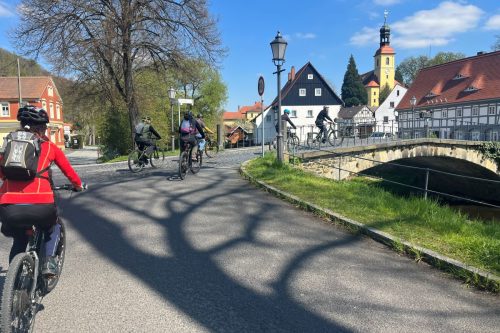
Cycling along the Mandava: discover the Mandava Cycle Route
The summer tourist season is slowly drawing to a close, and now is the perfect time to get out on your bike.…